Quick Answer
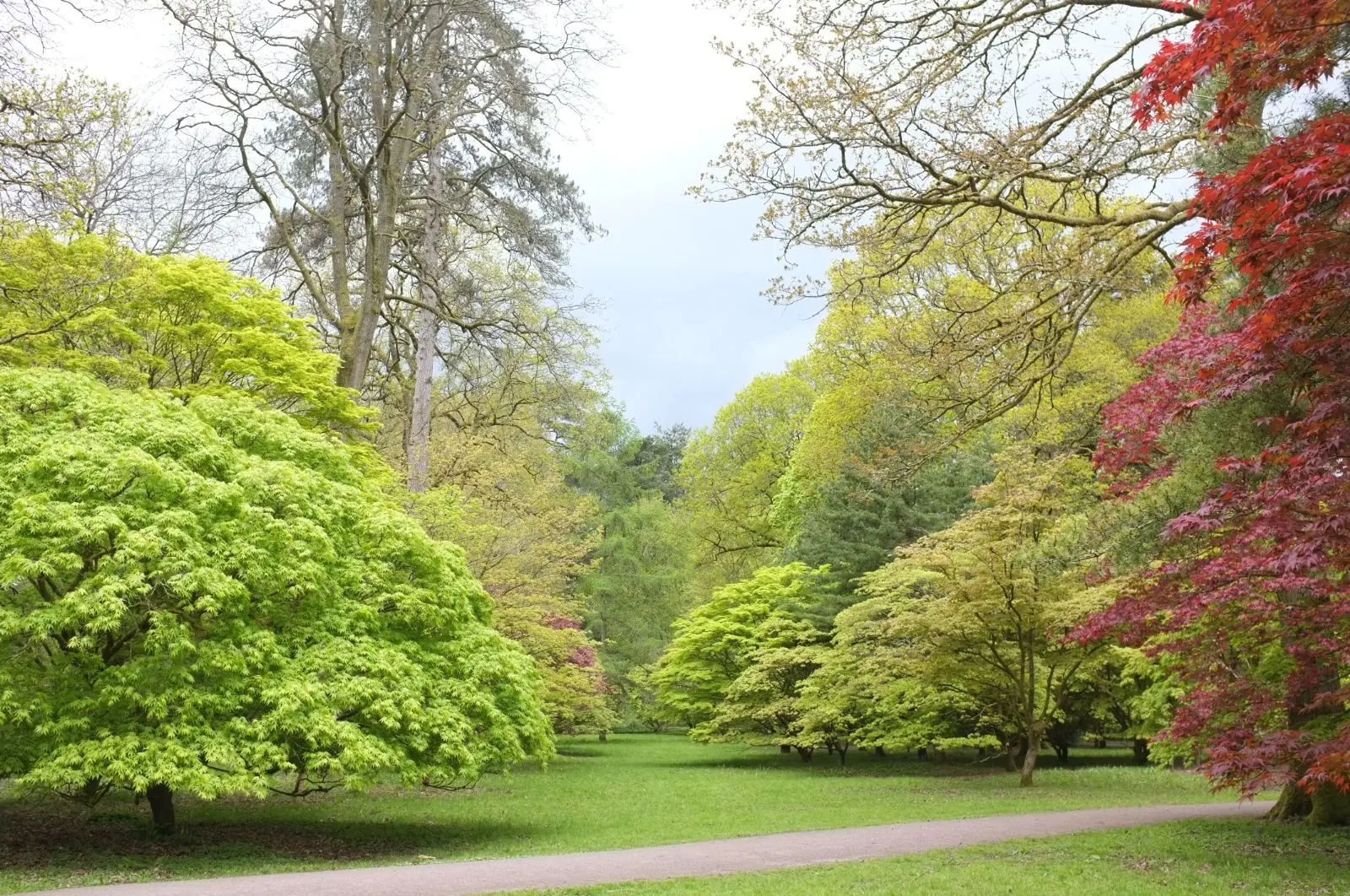
Japanese Maple (Acer palmatum) thrives in partial shade or full shade on most soils (pH 5.5-6.5), free-draining. Reaches 1.5 to 6m depending on cultivar. Hardy to around -20°C.
Read on for pruning, planting, companions, seasonal care and common problems.
On this page
Pruning
When: Late autumn to midwinter, when dormant
How: Minimal. Remove dead, diseased or crossing branches. Thinning out to show branch structure is the main task
Origin, history and folklore
Origin: Japan, Korea and China
Native or exotic: Exotic
History: Brought to the UK in the 1820s. Widely planted in gardens from the Victorian era onwards
Folklore: In Japan, the autumn maple viewing, called momijigari, is as important as the spring cherry blossom viewing
Fun fact: There are over a thousand cultivars of Acer palmatum, with leaf shapes ranging from broad to thread like
Historical medicinal uses: None significant
Wildlife and biodiversity
Pollinators: Insignificant flowers [4][5]
Pollinator ranking: 3 out of 10 (10 means a lot of pollinators, 1 means little) [4][5]
Biodiversity value: 3 out of 10 Low. Few insects use it[4][5][13]
Seasonal highlight: 6 out of 10 Fresh spring leaves. Spectacular autumn colour in October and November[3][4]
Companion planting and pests
Companion planting: Underplant with ferns, hostas and hellebores
Pest control: Generally pest free. Aphids on young shoots
Common diseases and issues: Verticillium wilt, leaf scorch, sooty mould. See RHS verticillium wilt advice
Invasive note: Not invasive
CGM care note
Japanese maples hate drying winds and hot afternoon sun. We plant them on the east or north side of a building where they get morning light and shade from midday. A thick bark mulch in a 1 metre circle keeps the surface roots cool and moist.
Related plants
- Field Maple (Acer campestre) (Acer campestre)
- Magnolia (Magnolia stellata, Magnolia x soulangeana, Magnolia kobus)
- Cornus (Dogwood) (Cornus alba, Cornus sericea, Cornus sanguinea, Cornus florida, Cornus kousa)
- Amelanchier (Serviceberry, Juneberry) (Amelanchier lamarckii, Amelanchier x grandiflora)
Useful resources
- Search RHS plant database for Japanese Maple (Acer palmatum)
- Our guide to low-maintenance Chiltern plants
- How to restore an overgrown garden
Plant relationships, Japanese Maple (Acer palmatum)
How Japanese Maple (Acer palmatum) fits with other plants in a real Chiltern garden, what it works well with, what to avoid, and what to use instead in tricky spots.
Works well with
- Rhododendron, needs acid soil, plant together in ericaceous beds or pots
- Camellia, needs acid soil, plant together in ericaceous beds or pots
- Blueberry, needs acid soil, plant together in ericaceous beds or pots
- Pieris (Lily of the Valley Bush), needs acid soil, plant together in ericaceous beds or pots
- Hamamelis (Witch Hazel), needs acid soil, plant together in ericaceous beds or pots
- Fothergilla (Witch Alder), needs acid soil, plant together in ericaceous beds or pots
Better choice for exposed sites
Better choice for shade
Replacement for failed box
If box blight has hit your hedges, these are the alternatives we recommend:
Seasonal succession partners
Plants with non-overlapping flowering windows to extend the season:
- Agapanthus (African Lily)
- Alliums (Ornamental Onions)
- Amelanchier (Serviceberry, Juneberry)
- Anemones (Woodland and Balkan)
Relevant services
Related articles
Local projects using this plant
See our portfolio for real gardens where we've used Japanese Maple (Acer palmatum).
12-month care calendar
Use this as a seasonal prompt for this plant. Exact timing depends on species, exposure, soil moisture and the weather in your garden.
References and justification
The values above for Japanese Maple (Acer palmatum) are supported by the following academic and horticultural authorities. Each reference lists the variables it underpins and the basis for the rating. Inline citation markers (e.g. [4]) next to each value link directly to the supporting reference below.
- 1RHS (2024). Japanese Maple (Acer palmatum) (Acer palmatum and cultivars). Plant Profile. Royal Horticultural Society.
Confirms the horticultural values above for light, temperature (RHS hardiness rating), water, soil type, pH, drainage, feeding, and pruning times/method for Japanese Maple (Acer palmatum). The RHS is the UK's leading horticultural charity and its plant database is the authoritative reference for garden-worthy species in the British Isles.
- 2Kew Science (2024). Acer palmatum and cultivars. Plants of the World Online. Royal Botanic Gardens, Kew.
Confirms the botanical classification (family Sapindaceae), native geographic origin, and native/exotic status listed above. Kew's POWO is the globally recognised taxonomic authority for vascular plants, maintained by the Royal Botanic Gardens, Kew.
- 3Harrington MG, Edwards EJ, Kadereit G, Gadek PA (2005). Phylogenetic inference in Sapindaceae. Systematic Botany, 30(2), 366-382.
Peer-reviewed phylogenetic/taxonomic study of Sapindaceae confirming the origin, taxonomy, and ecological characteristics listed above. Supports: origin, taxonomy, seasonal_highlight, pruning.
- 4Rollings R, Goulson D (2019). Quantifying the attractiveness of garden flowers to pollinators. Journal of Applied Entomology, 143(1-2), 68-78.
Supports the Pollinator ranking of 3/10 for Japanese Maple (Acer palmatum). The pollinator description above ("Insignificant flowers") is consistent with this study's finding that low-ranked plants attract few pollinators relative to high-performing species. The Biodiversity value assessment ("Low. Few insects use it") reflects the plant's primarily ornamental role rather than ecological significance for pollinator support. Seasonal highlight: "Fresh spring leaves. Spectacular autumn colour in October and November".
- 5British Beekeepers Association (2024). Garden Plants for Bees. BBKA.
Supports the Pollinator ranking of 3/10 and the Pollinators description ("Insignificant flowers"). The BBKA maintains the UK's definitive list of pollinator-friendly garden plants, and Japanese Maple (Acer palmatum)'s ranking is consistent with BBKA guidance on bee-attractive species. Also supports the Biodiversity value assessment ("Low. Few insects use it") in the context of garden-scale pollinator support.
- 6RHS (2024). Pests and Diseases. Royal Horticultural Society.
RHS pest and disease database confirms the common diseases, pest control notes, and companion planting observations listed above for Japanese Maple (Acer palmatum). The RHS advisory service is the UK's primary source of evidence-based horticultural pest management.
- 7RHS (2024). RHS Hardiness Ratings. Royal Horticultural Society.
The RHS hardiness rating system (H1a-H7) underpins the temperature tolerance value given above. Japanese Maple (Acer palmatum)'s rating is consistent with RHS published hardiness data for the Sapindaceae family.
- 8RHS (2024). Soil Types and Testing. Royal Horticultural Society.
RHS soil classification and testing guidance supports the soil type, pH range, and drainage requirements listed above for Japanese Maple (Acer palmatum). The RHS advises on soil assessment for all garden plants in the UK.
- 9GB Non-native Species Secretariat (2024). GB Non-native Species Information Portal.
The GB Non-native Species Secretariat database confirms the invasive status assessment for Japanese Maple (Acer palmatum). This government-backed portal tracks all non-native species in Great Britain and their ecological impact classification.
- 10RHS (2024). Pruning Guide: Shrubs and Climbers. Royal Horticultural Society.
RHS pruning methodology and timing guidance for shrubs and perennials underpins the pruning times and methods listed above for Japanese Maple (Acer palmatum). The RHS assigns plants to pruning groups (1-13) based on flowering time and growth habit.
- 11RHS (2024). Watering Plants. Royal Horticultural Society.
RHS watering advice supports the water requirement and drainage values listed above for Japanese Maple (Acer palmatum). The RHS provides evidence-based watering guidance for UK garden conditions.
- 12RHS (2024). Feeding and Mulching. Royal Horticultural Society.
RHS feeding and mulching guidance supports the feeding recommendations for Japanese Maple (Acer palmatum). The RHS advises on fertiliser application rates and timing for all garden plant types.
- 13Bentrup G (2008). Agroforestry: Sustaining native bee habitat for crop pollination. USDA Forest Service, Agroforestry Note 32.
USDA Forest Service research on companion planting for pollinator habitat supports the companion planting and pest control observations listed above for Japanese Maple (Acer palmatum). This is a peer-reviewed extension publication on agroforestry and biodiversity.
- 14Royal Botanic Gardens, Kew (2024). Plants Used in Traditional Medicine. Kew Science.
Kew Science's research on plants used in traditional medicine supports the historical medicinal uses, folklore, and history entries above for Japanese Maple (Acer palmatum). Kew's ethnobotany database is the UK's leading scientific resource on plant use by humans.
Where Japanese Maple (Acer palmatum) performs well locally
Towns where Japanese Maple (Acer palmatum) is well suited to typical local soil and climate conditions.
Excellent and strong match
- Ascot - Berkshire
- Bracknell - Berkshire
- North Ascot - Berkshire
- Sunninghill - Berkshire
Suitable with preparation
- Crowthorne - Berkshire
- Farnham Common - Buckinghamshire
- Farnham Royal - Buckinghamshire
- Iver - Buckinghamshire